Loading…

Loading…
 Al Qattara Oasis
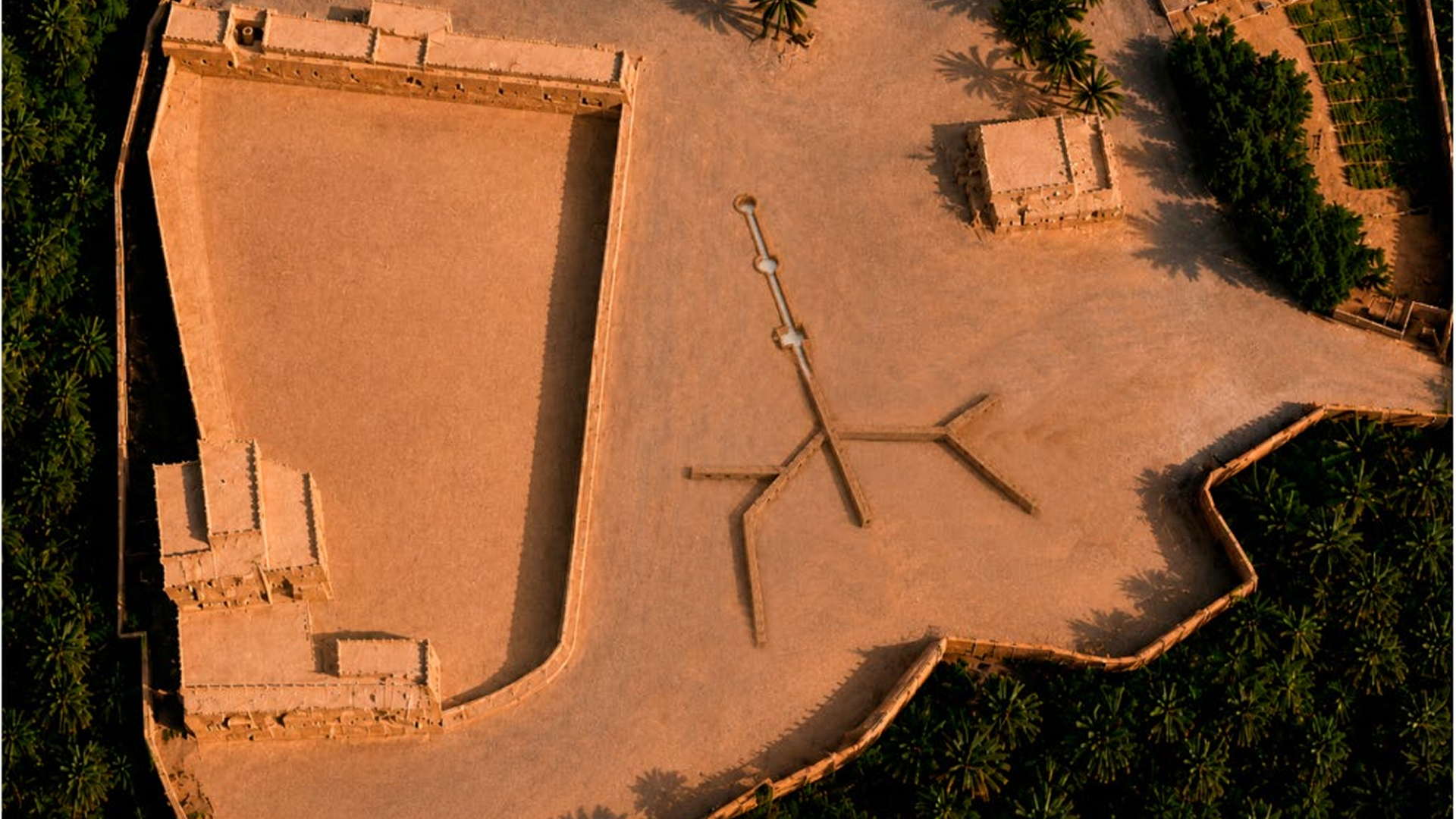
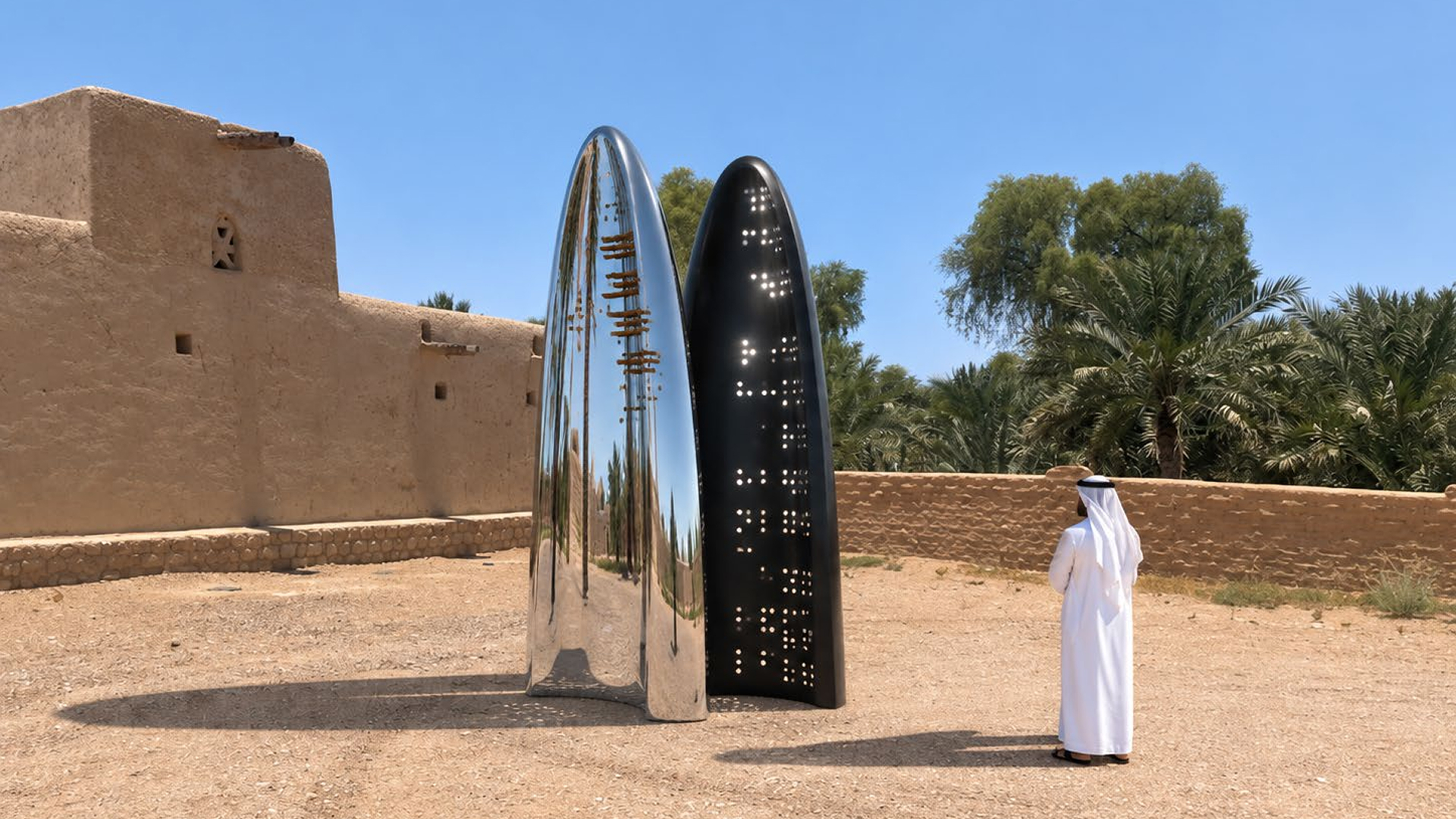
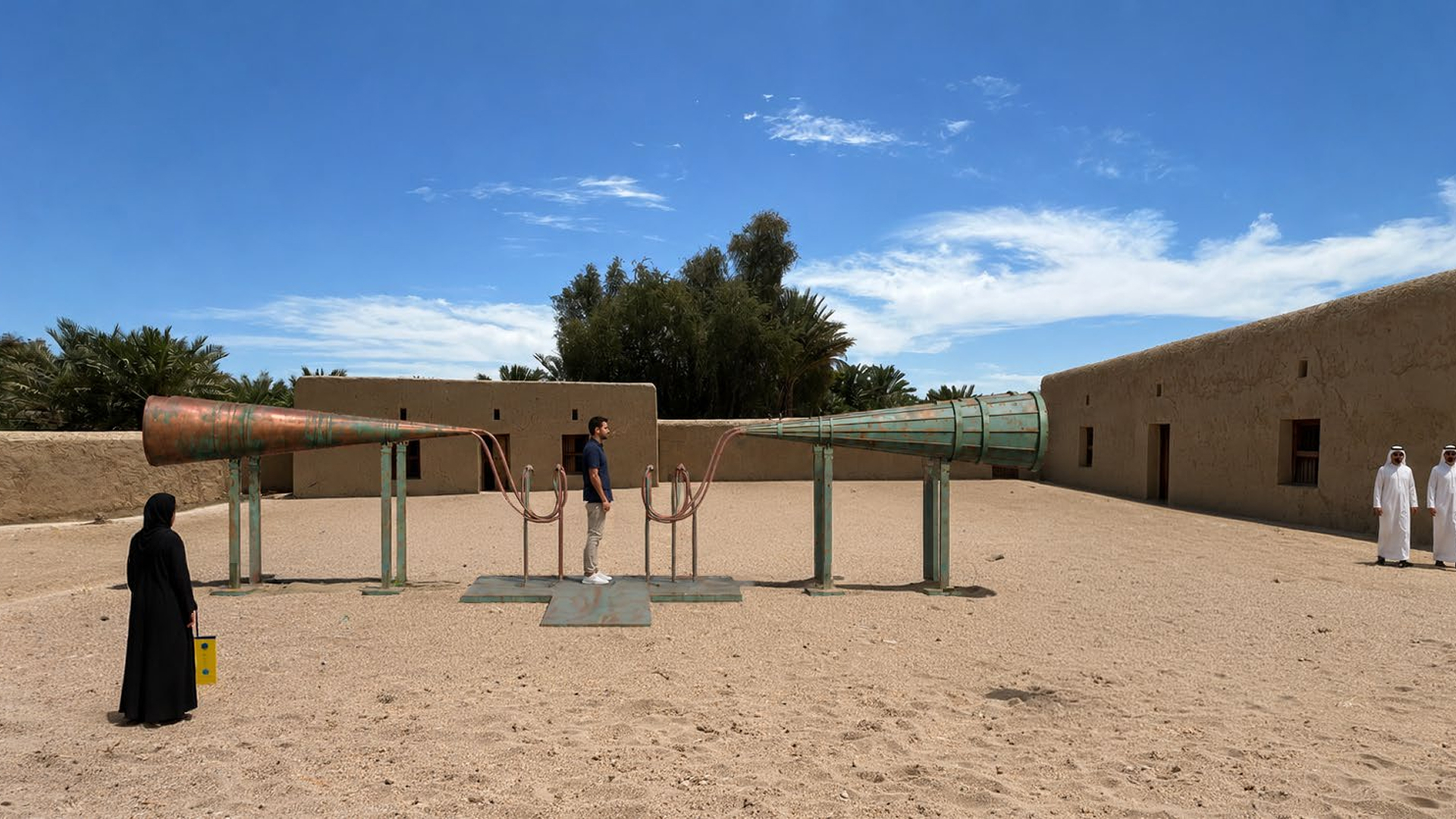
Asunción Molinos Gordo’s research-based practice draws on anthropology and sociology to explore contemporary peasantry and the knowledge embedded within rural communities. Bil Hana wa Al Afia (2026) centres on Al Aflaj, traditional irrigation systems that originated during the Iron Age and continue to support shared water distribution among farmers in the Emirates. Built from rammed-earth walls arranged in a root-like form, the installation evokes the inner structure of these irrigation networks. Seven stratigraphic layers represent different historical periods, incorporating ceramics, artefacts, and other material traces from each era. Located within Al Ain Oasis, a UNESCO World Heritage Site, the installation coexists with working farms and daily irrigation practices, paying tribute to a living waterscape shaped by cooperation, equitable access, and collective care.
Spain
Asunción Molinos Gordo is a research-based artist whose practice is strongly influenced by anthropology, sociology, and cultural studies. Focusing on contemporary peasantry, she examines how rural communities and farmers are often overlooked within dominant ideas of innovation and progress. Working across installation, sculpture, film, sound, and other media, her work explores land use, rural labour, biotechnology, water management, and the global food trade, highlighting the knowledge and cultural agency embedded within agricultural communities. Her work has been exhibited at the Guggenheim Museum Bilbao; the Victoria and Albert Museum, London; Jameel Arts Centre, Dubai; CA2M, Madrid; and IVAM, Valencia. She won the Sharjah Biennial Prize (2015) and represented Spain at the 13th Havana Biennial (2019). Molinos Gordo earned a BFA (2003) and a master’s in contemporary art theory and practice (2006) from the Universidad Complutense de Madrid. She is currently studying anthropology and ethnography at UNED, Madrid.
Loading map…